
Answer in 2 sentences
A useful Claude Code plan mode prompt asks for an evidence-based proposal with scope, assumptions, implementation steps, risks, and verification before changes begin. Treat approval as a decision about a specific proposed change, and ask the agent to revise the plan when unresolved questions could alter the result.
What does a plan-first workflow accomplish?
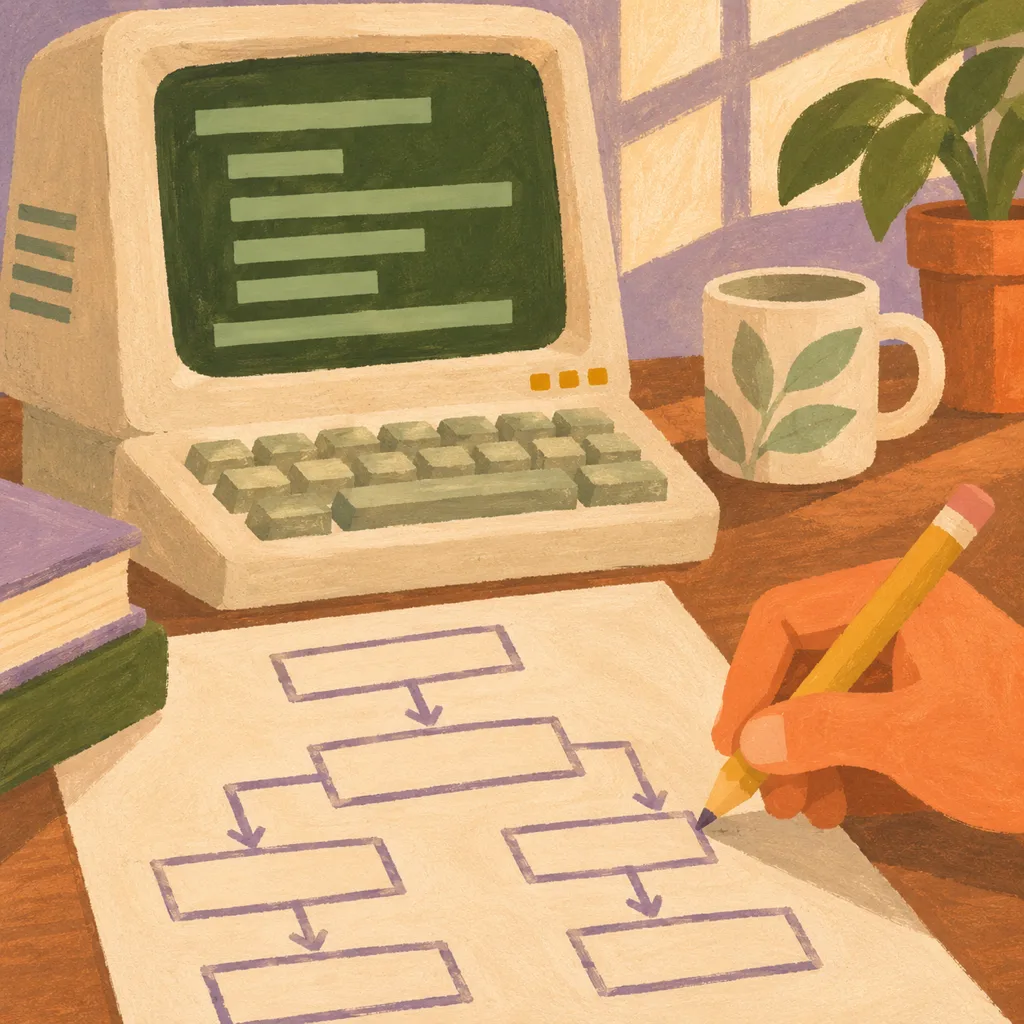
A plan-first workflow separates investigation and proposal from implementation. You describe the outcome, the agent inspects relevant context, and you review a concrete approach before authorizing changes. This is useful when the work crosses several components, involves a product decision, or could break behavior that is easy to overlook.
The plan should help you answer three questions: Does the agent understand the problem? Is the proposed scope appropriate? How will we know the result works? A list such as “update backend, update frontend, test” answers none of them because it hides the important choices.
This guide focuses on prompts and review criteria rather than interface shortcuts or command syntax. Use your environment's supported planning controls, and state the requested boundary explicitly in the task. A sentence requesting planning is useful guidance, but it should not be mistaken for a technical permission control.
Other coding agents have similar plan-first workflows. Whether you are preparing a Claude Code task or an OpenCode plan, the durable part is the brief: inspect the current implementation, propose a bounded change, expose uncertainty, and identify checks before implementation.
What context should you provide before asking for a plan?
Give the agent the user journey, observed behavior, intended outcome, and important constraints. Include relevant project instructions and known decisions. If the task affects several teams, name the unresolved owner decision rather than letting the agent choose silently.
Useful context is selective. The entry point for a feature and a reliable reproduction are often enough to start investigation. Pasting unrelated logs or an entire product roadmap can obscure the actual task. Ask the agent to inspect the repository and cite relevant files in its proposal.
Reusable planning wrapper: Plan the task below before implementing it. Inspect the existing implementation and project instructions. Do not edit files or perform state-changing actions during this planning step. Return the current behavior, proposed behavior, affected areas, ordered steps, risks, assumptions, open decisions, and verification plan. Tie material claims to inspected files. If you cannot inspect something, identify it as unknown. Stop after the proposal for review.
Use that wrapper with one of the task templates below. Replace illustrative details with the behavior and constraints of your own project.
Which prompt produces a useful feature plan?
Copy this feature prompt: Plan an activity filter for the existing customer dashboard. Users should filter the activity list by event type and date range, clear the filters, and keep the selected values when opening an event and returning to the list. Inspect the current routing, data fetching, and list components before proposing changes. Identify whether filtering should happen in the client or through the existing data endpoint, and explain that choice using the current implementation.
Preserve current event ordering and access rules. Reuse existing controls and date conventions. Do not add an export flow, analytics service, or new dependency. Identify the files or modules likely to change, any data contract changes, and how empty results, invalid date ranges, loading, and failed requests should behave. Mark product choices that need an answer before coding. Propose verification for applying filters, clearing them, navigating away and back, and preserving access boundaries. Return a plan only.
A strong response explains where filter state lives and how navigation restores it. It distinguishes an empty filtered result from a failed request. If the data endpoint cannot support the desired filter, the plan should expose that limitation and its consequences before describing interface work.
Reject invented certainty. “The API supports date filtering” needs evidence from the repository or supplied documentation. If that support is unknown, the first step should establish it.
How should you prompt for a refactor plan?
Copy this refactor prompt: Plan a refactor of duplicated validation in the account settings forms. The goal is shared validation behavior with no intentional change to accepted input, error messages, submission timing, or server request shape. Inspect the existing forms, validation helpers, and relevant tests. Identify which rules are actually shared and which are specific to an individual field or flow.
Propose the smallest useful shared abstraction and show how each caller would use it. Preserve existing public interfaces where possible. Do not redesign the settings screens, rename unrelated modules, or replace the form library. List current behaviors to capture before changing code, the order for migrating callers, and the checks after each migration. Explain how the refactor could be divided into reviewable changes and how to revert if a regression appears. Return the proposal without editing files.
The key review question is whether the abstraction represents a real shared rule. Two functions with similar names may differ intentionally. A plan should preserve those differences or explicitly identify a requested behavior change instead of hiding it inside a cleanup.
Ask for a representative caller example in plain text when the proposed interface is difficult to assess. You need enough detail to judge the abstraction, without requiring a full implementation during planning.
What prompt helps investigate a bug without guessing the cause?
Copy this investigation prompt: Investigate why clearing the search field sometimes leaves an empty-results message on the results page. Reproduction: open the list, search for a term with no matches, then clear the field. Expected result: the full list returns and the message disappears. Inspect how query state, derived results, and the empty state interact. Do not edit files yet.
Return the relevant execution path, plausible causes ranked by current evidence, and the smallest check that would distinguish them. Separate observations from hypotheses. If you can reproduce the issue using read-only investigation, report the steps and result. Otherwise state what prevented reproduction. Propose a focused fix only after explaining the likely cause, and include regression checks for no matches, clearing the field, and a query with matches. Identify any missing environment details needed to proceed.
This prevents a common failure: treating the user's suggested cause as established fact. A stale message might come from query state, cached results, or display logic. Investigation should narrow the possibilities before a change is proposed.
How do you review a plan before approving it?
Read the plan against the original task, not just its internal logic. A coherent proposal can still solve the wrong problem. Check these points:
- Outcome: Does the proposed behavior match the user journey and acceptance criteria?
- Evidence: Are important implementation claims tied to inspected files or supplied references?
- Scope: Are unrelated features, dependencies, and redesigns excluded?
- Decisions: Are assumptions and unresolved product choices visible?
- Failure handling: Does the plan cover relevant errors and edge cases?
- Verification: Can someone perform the checks and distinguish success from failure?
- Recovery: Is there a practical way to reverse a risky change or limit its rollout?
Treat the amount of detail as proportional to the change. A small copy correction needs little planning. A migration affecting stored data needs explicit sequencing and recovery thinking. A long plan is not automatically safer if its key assumptions remain unsupported.
What should you say when a plan needs revision?
Copy this review prompt: Revise the plan before implementation. Keep the original objective, but address these gaps: [specific gaps]. For each gap, explain what evidence or decision is needed, how it changes the proposed approach, and which acceptance check covers it. Remove [out-of-scope change]. Return the revised plan and remaining blockers, then wait for approval.
Avoid a vague response such as “be more thorough.” Ask for the missing decision: where filter state is stored, how old records remain readable, or which caller depends on the current error message. That turns review into a concrete improvement.
After approval, state which revision is approved and whether the scope includes implementation and validation. If new evidence materially changes the plan, ask the agent to surface the change before continuing with a different approach.
How can you make planning prompts reusable?
Keep a stable planning checklist and supply a fresh task brief each time. Reuse the review criteria, output structure, and uncertainty rules. Replace the feature facts, affected areas, and acceptance criteria. The project instructions guide explains where stable repository guidance belongs.
PromptDC is a universal AI assistant whose profiles are reusable instructions, with Code as one option for organizing coding briefs. The Claude Code terminal guide and Claude Code integration page describe related prompt-writing workflows; the planning and approval decisions still belong to you and your coding environment.
FAQ
What should a Claude Code plan mode prompt include?
Include the goal, context, constraints, investigation boundary, expected plan structure, and acceptance checks. Ask the agent to identify uncertainty before proposing implementation.
Does requesting a plan guarantee that no changes happen?
No. Use the environment's supported controls as well as an explicit instruction. Review the tool permissions and task boundary relevant to your working setup.
Should every coding task start with a detailed plan?
No. Use a short plan for small, clear changes. Spend more review effort when work crosses components, changes contracts, or depends on unresolved decisions.
Can I reuse these prompts with other agents?
Yes. The templates describe a general plan-first workflow. Adapt the references and controls to the agent and repository you use.
When is a plan ready to approve?
Approve when the scope, evidence, decisions, and verification are concrete enough to assess. Resolve missing facts that would materially change the approach first.